Every week, someone calls us asking for "a logo." What they actually need, almost every time, is a brand identity. Those are not the same thing, and the gap between them is where a lot of Triangle businesses quietly underinvest.
A logo is a mark. A brand identity is the whole system: the mark, the color palette, the typography, the voice, and the rules for how all of it holds together across a website, a truck wrap, a business card, and a Google search result. If you buy the logo and skip the system, you end up with a nice icon sitting on top of a site that looks like it was decorated rather than designed.
So let's talk numbers, and more importantly, let's talk about what those numbers are actually buying.
What's actually included in a brand identity project
A real brand identity project produces a set of decisions and assets that everything else gets built on:
- A primary logo and its variations (horizontal, stacked, icon-only, for different contexts)
- A color system, not just "our brand color" but a working palette with defined roles
- Typography choices for headlines, body copy, and UI elements
- Visual language, meaning the photography style, iconography, and layout patterns that make the brand recognizable even without the logo present
- Usage guidelines, so the identity stays consistent as different people touch it over time
Notice that "website" isn't on that list. Brand identity is upstream of the website. It's the material the website is built from. That ordering matters, and we'll come back to it.
Why a logo alone is not a brand identity
Here's the test we use: if you removed the logo from a page and it still looked unmistakably like your business, you have a brand identity. If the page becomes generic without it, you have a logo sitting on a template.
A logo answers one question: what's your mark? A brand identity answers a harder one: what does it feel like to interact with you, everywhere, every time? That second question is what actually moves a website's performance. Visitors decide whether to trust a business in a few seconds, and they're reading typography, color, spacing, and tone to make that call, not just the icon in the header.
This is also why "just design a logo" quotes look cheap and "brand identity" quotes look expensive for what seems like similar work. They're not similar. One is an asset. The other is a system that has to hold up under pressure across dozens of applications.
What drives the price up or down
Brand identity cost is not mysterious once you know what to look at. A few factors do most of the work:
How many applications the identity needs to cover. A brand that only needs to work on a website is a smaller job than one that needs to work on a website, vehicle wraps, signage, and printed materials at the same time.
How crowded and how competitive your category is. If you're one of a dozen businesses in your category with nearly identical visual identities, the design has to do more work to differentiate you, and that takes more strategy time up front, not just more polish at the end.
Whether you're building from nothing or repositioning an existing brand. A brand-new business starts with a blank page, which sounds harder but is often faster than untangling an existing identity that has accumulated inconsistent logos, colors, and messaging over years.
How many audiences the brand has to speak to at once. A brand that only needs to appeal to local customers is simpler than one that has to read as credible to industry partners and also be appealing to a general audience, because those two groups often respond to different signals.
Scope of the deliverables and guidelines. A short style reference is less work than a full usage guide meant to keep a growing team consistent for years.
None of this is about how many logo concepts you get to look at. If a quote's main pitch is "you get five logo options," that's a signal you're being sold a logo project with a brand identity price tag, not the other way around.
What it looks like when brand identity does real work
Three Triangle projects show what distinct brand identity actually buys you, and none of them involve just swapping a logo onto a template.
Titan Junk Removal is a family-owned operator competing against national franchise brands in a category where someone standing in a garage full of junk is searching on their phone and calling the first company that looks legitimate. We built a bold gold-on-dark identity specifically to stay legible and distinctive in crowded local search results, paired with a mobile-first site where click-to-call is the dominant action. The brand identity isn't decoration here. It's the thing that makes a local, family-run business look substantial enough to compete with a franchise on home ground.
Old Copperhorn Entertainment had a harder problem: a studio developing original franchise IP that has to look credible to industry partners and, at the same time, make future fans care about worlds that don't exist as finished products yet. There's no product to point to, so the visual language has to carry the entire argument. We built a visual identity distinctive enough to read as a studio with a real point of view, and designed it to expand across streaming, film, and comics without forcing a rebuild every time a new property launches.
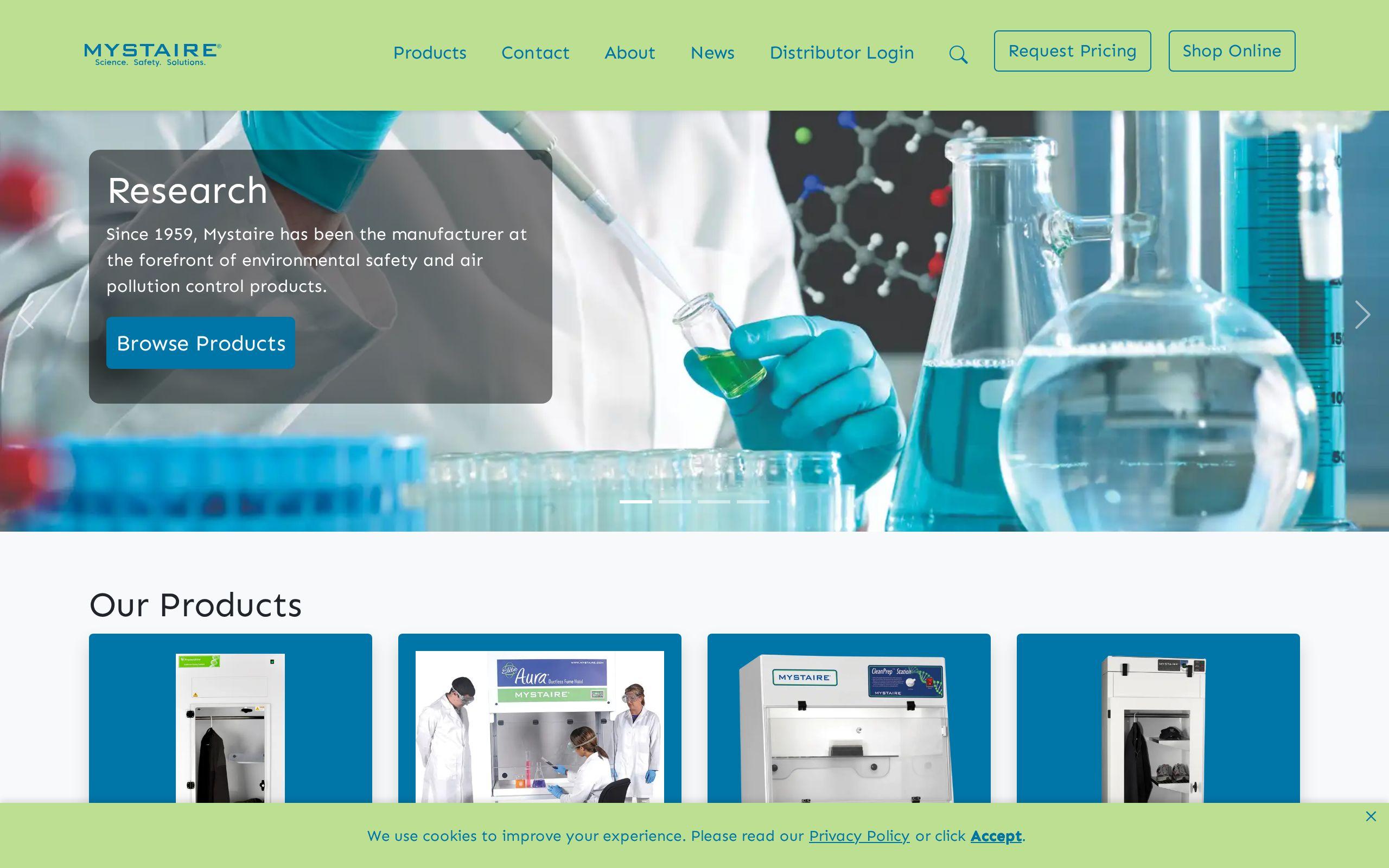
Mystaire is the clearest case of brand identity as the entire pitch. When a company's goal is market presence rather than closing a sale on the page, there's no feature list or price sheet doing the persuading. Every detail, the typography, the spacing, the pacing, has to communicate the standard the business operates at. We developed a refined identity precise enough to carry that positioning on its own, then built clean, unhurried layouts that let the design do the talking.
In all three cases, the brand identity came before the layout decisions, not after. That's not a coincidence.
How to decide whether you need brand work before a website
Ask yourself one question: if a competitor copied your website's layout but kept their own colors, fonts, and logo, would your business still feel distinct? If yes, your brand identity is probably doing its job, and you can move straight to web design. If no, that's your answer.
A quick gut check that works for most owners:
- If your industry has several competitors with visually similar sites, you need brand work first.
- If you're phone-first and competing against bigger, better-funded competitors, distinct identity is what earns the split-second decision to call you instead.
- If your product or service is intangible or hard to show in photos, the brand identity has to carry more of the persuasion, which means it needs more attention, not less.
- If you already have a strong, consistent identity and just need it built into a site, you can skip straight to web design.
If you're not sure which category you're in, run your current site through our free speed test first. It won't tell you about your brand, but it will tell you whether your foundation is solid enough that brand work is the right next investment rather than a distraction from more urgent problems.
Once you know where you stand, talk to us. Get started with a conversation about your brand and your website together, in the right order, so the money you spend on one makes the other work harder. Or read more about how we approach this on the Brand Development page.