
Short answer: yes. Get the profile, keep the profile, and also build a website.
Here is why, and what the smallest useful version of that website looks like.
Is a Google Business Profile enough on its own?
For a week or two, maybe. For a business you plan to grow, no.
A Business Profile is excellent at one job. It puts your name, phone number, hours and reviews in front of someone searching in Raleigh, Cary or Durham at the exact moment they want what you sell.
That is a big job. It is not the whole job.
A profile gets you the tap. A website gets you the customer. Those are different results, and treating them as the same thing is how owners end up with a decent listing and a quiet phone.
What a Business Profile does well, and where it stops
Credit where it is due. A profile is free, it sits at the top of local results, and it shows reviews and photos in a format people already trust.
Now look at what it cannot do:
- Explain your process, your pricing approach or why you are different
- Show a full menu, a full service list or real project work
- Answer the questions people ask before they call
- Tell your story in your own words and layout
- Give you a page for every service and every town you cover
A profile is a business card with good lighting. Useful, but a card. When a buyer wants to be convinced, they need somewhere to go.
Why a profile you do not control is a risk to your leads
You do not own your profile. Google does.
Google can suspend a listing, flag an edit, merge a duplicate, change which fields are shown or rearrange the page entirely. Anyone can suggest edits to your hours or category. Sometimes a competitor does. Sometimes a stranger gets it wrong.
When that happens, your leads stop, and you may not get a phone call explaining why.
A website sits on your own domain. You choose what it says, how it looks and who sees it. Every serious marketing channel you add later, from email to print to referrals, can point at a place you control.
Rented space is fine. Just do not make it your only address.
What happens after someone taps your listing and finds no website
Picture it. Someone in North Raleigh searches for a contractor, sees three listings and taps yours. They find a handful of photos, some stars and a phone number.
Now picture the competitor next to you. Same stars. But they also have a site with services, finished work and a clear answer to "what does this cost and how does it work?"
Who gets the call?
Not having a website does not just lose you the people who wanted more information. It tells careful buyers something about you, whether it is fair or not. Some will call anyway. Plenty will not, and you will never see them leave.
What a website gives the map pack that a profile cannot
The profile and the site are not rivals. They feed each other.
Your profile has a website link field, and what sits at the other end of that link matters. A site that clearly states what you do, where you do it and who you do it for backs up what the profile claims about your category and service area.
A website also lets you build pages for individual services and individual places. A profile cannot hold forty paragraphs of useful, specific content. A site can.
That is the core of local SEO work. If you want the longer version, our SEO and analytics service covers how the pieces fit.
How a restaurant like Las Mas turns a local search into a walk-in
Restaurants live and die on the quick decision. Someone on a sidewalk is choosing where to eat right now.
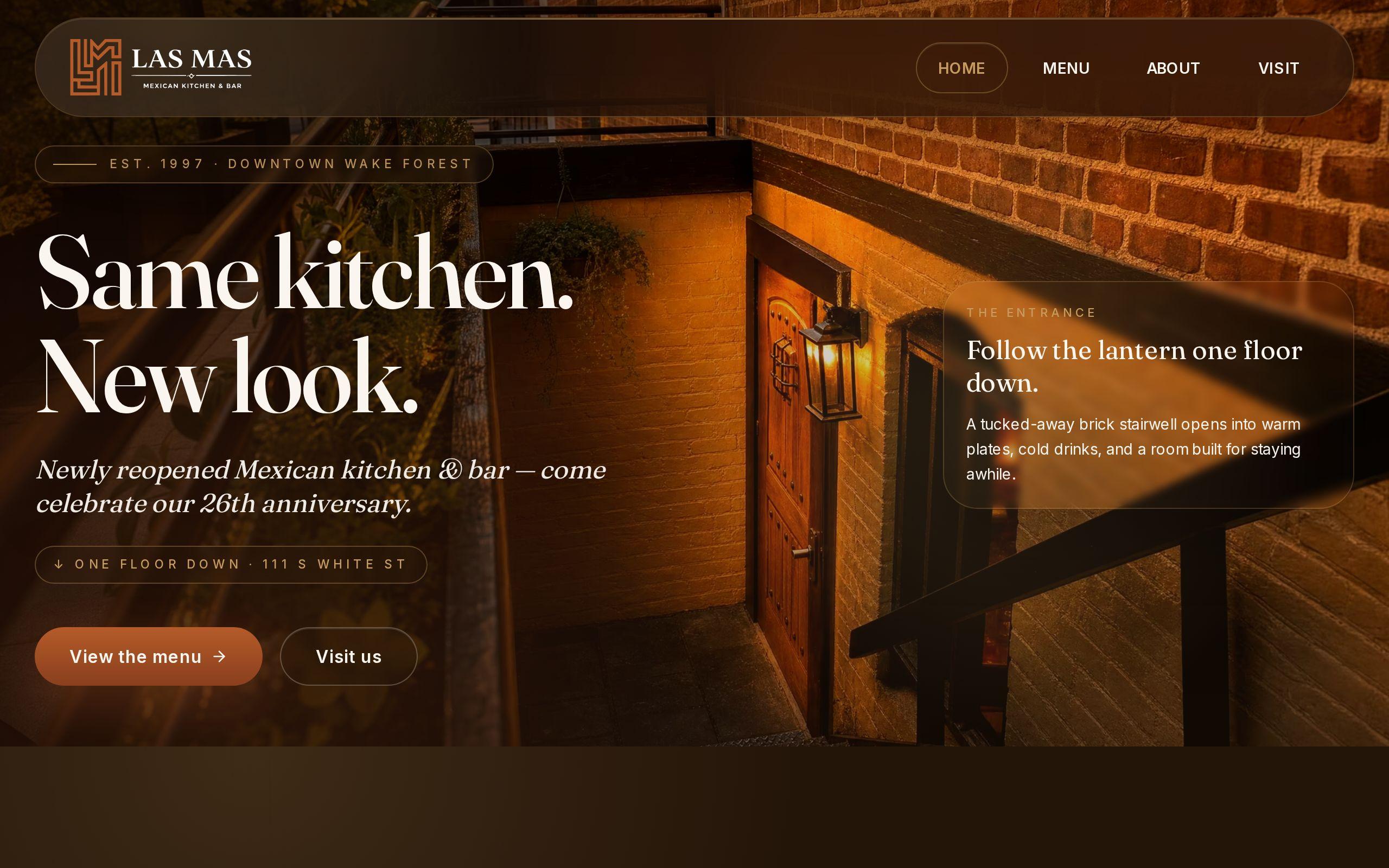
That is the problem we solved for Las Mas Mexican Kitchen & Bar, a 25-year Wake Forest institution. The site puts the menu, hours and location within one tap of every screen, because that is what a hungry visitor came for. Food photography does the selling. The family story runs through the whole site instead of hiding on an about page.
The profile gets Las Mas found. The site is where a diner confirms the menu looks good, sees the hours and walks over, instead of opening a delivery app.
Read more in the Las Mas case study. If you run a restaurant, our restaurant website design page covers the approach.
How a small operator competes with national brands on home ground
Search for junk removal and you will see national franchises with large budgets and recognizable names.
Titan Junk Removal is a family-owned operator. Their customers are standing in a garage full of stuff, searching on a phone and calling whoever makes calling easiest. So we built the site mobile-first, with click-to-call as the dominant action on every page. The bold gold-on-dark identity stays distinctive in crowded results, and the site is structured for local SEO so it competes with the franchises on home ground.
A profile alone would not carry that. The site is what makes a small shop look substantial and keeps the phone within thumb reach.
See the Titan Junk Removal project for the details.
The minimum website a Raleigh business needs alongside its profile
You do not need fifty pages. You need these:
- A home page that says what you do, where, and for whom, in the first screen
- One page per core service, each with its own plain-language explanation
- A service area or location page naming the Triangle towns you actually serve
- An about page with real people and a real story
- A contact page with a phone number that taps to call, plus hours and an address if customers visit you
- Proof, meaning reviews and photos of finished work
Make it load quickly on a phone. You can check yours with our free speed test.
If you want help scoping this, our small business website design in Raleigh page lays out what that looks like.
When a profile alone is honestly enough
You just launched. You have no budget yet. You are testing whether anyone wants what you sell.
Fine. Claim your profile, fill out every field, ask for reviews and answer the phone. That is a reasonable first month.
Set a date, though. Once you have steady customers, a profile-only business is leaving money on the table and exposing itself to a platform that can change the rules overnight.
How to connect the two so each strengthens the other
Do this in order:
- Put your website URL in the profile, and make sure it opens a page that matches the listing
- Keep your business name, address and phone number identical on both
- Choose the profile category that matches your main service, then build a site page for it
- Add a Google map and your profile link on the contact page
- Use the same photos and the same wording for services in both places
- Link your best-reviewed services from the profile to their matching pages
When both say the same thing, Google has less to guess about, and customers have nothing to doubt.
Your next step this week
Open your Business Profile and tap your own website link, if there is one. On your phone, not your laptop.
Can you find the services, the hours and a button to call within ten seconds? If not, that is your first fix. If there is no link at all, write down the six pages from the list above. That is your site.